Monday, May 28, 2007

Fine Art By Prada

Prada - the master of minimalism. If you want to look classic, fashionable and stylish at the same time without gaining the attention of everyone around - choose Prada. This brand gives you the fine taste lines which are acceptable for a very broad range of people, not depending on their age or position in society. Prada always looks good because of its minimalistic designs, few contrasting colors, simple patterns and innovative fabrics.

The affair, originally known in Italy as ( " Prada Brothers " ), was founded in 1913 by Mario Prada in Milan. In 1978, Mario's granddaughter Miuccia Prada inherited what was still a leather goods business from her mother, and led the company's expansion into couture. an overall more bohemian allure. In its advertising campaigns, waif - matching models in " home photo " poses fresh the look. Miu Miu clothing is often simple, and evokes a continual ringer of high - end vintage items. Firm was followed by the Prada Sport 'Linea Rossa' Prada won a Council of Fashion Designers of America International Award for accessories in 1993 and currently Prada is voluntary one of the most influential clothes designers in the fashion industry. American Vogue editor Anna Wintour is a fan of Prada. Among the coin elite, Prada represents the pinnacle of intellectual, high - concept procreate whereas Gucci or Louis Vuitton are pragmatic as more commercial - oriented organizations

Prada currently has 14 locations in the U. S. Six are New York, as well because boutiques in Bal Veil, Beverly Hills, San Francisco, Chicago, Honolulu, Waikiki, and Las Vegas. A boutique in the Mandarin Oriental hotel in Boston is planned to unbarred soon.

Prada has three flagship " epicenter " stores as well that are much larger and carry more products than regular boutiques. These are located in New York, Beverly Hills, and Tokyo.

Like the current Gucci and [[including handbags, perfumes, shoes, and clothes.

Following the lead of other companies in a popular trend to consume whereas many other design houses as possible, Prada took on large debts when firm acquired the financially foundering Rome - based house of Fendi in the early 1990s. Prada assumed shares in Fendi with the Moet Hennesy Louis Vuitton ( LVMH ) company. Prada was unable to turn around / reinforcement the money - losing Fendi label, and sold its Fendi shares to LVMH. Prada is still recovering from this debt.

The Prada Group's offbeat notable purchases in the 1990s were the Helmut Lang and Jil Sander labels. By 2006, however, both labels had been sold. il Sander was sold to the unique equity firm Change Capital Partners, which is headed Luc Vandevelde, the chairman of Carrefour, while the Helmut Lang label is now owned by Japanese fashion company Link Fancy.


Tuesday, May 8, 2007

Louis Sullivan Architecture

Born in Boston in 1856 and died in Chicago in 1924. Sullivan is famous with his concept, "form ever follows function".Louis Sullivan is widely considered America's first truly modern architect and is best known for his innovative Chicago skyscrapers. However, his most elegant and engaging buildings were a series of modest bank buildings he designed for several small communities in the Midwest. Older architectural styles were designed for buildings that were wide, but Sullivan was able to create aesthetic unity in buildings that were tall. Instead of imitating historic styles, he created original forms and details.


Thursday, May 3, 2007

Andy Warhol - The Hero of Pop-art

Andy Warhol (August 6, 1928 — February 22, 1987) was an American artist, a central figure in the movement known as Pop Art. After a successful career as a commercial illustrator, Warhol became famous worldwide for his work as a painter, an avant-garde filmmaker, a record producer, an author and a public figure known for his presence in wildly diverse social circles that included bohemian street people, distinguished intellectuals, Hollywood celebrities and wealthy aristocrats.

A controversial figure during his lifetime (his work was often derided by critics as a hoax or "put-on"), Warhol has been the subject of numerous retrospective exhibitions, books and documentary films since his death in 1987. He is generally acknowledged as one of the most influential artists of the twentieth century.

His works:


Wednesday, May 2, 2007

René Magritte - Only Art

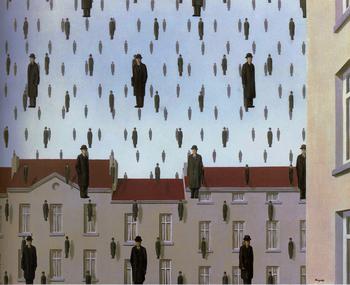
René François Ghislain Magritte (November 21, 1898 – August 15, 1967) was a Belgian surrealist artist. He became well known for a number of witty and amusing images.
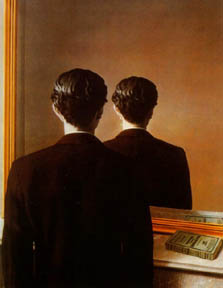
A consummate technician, his work frequently displays a juxtaposition of ordinary objects in an unusual context, giving new meanings to familiar things. The representational use of objects as other than what they seem is typified in his painting, The Treachery Of Images (La trahison des images), which shows a pipe that looks as though it is a model for a tobacco store advertisement. Magritte painted below the pipe, This is not a pipe (Ceci n'est pas une pipe), which seems a contradiction, but is actually true: the painting is not a pipe, it is an image of a pipe. (In his book, This Is Not a Pipe, French critic Michel Foucault discusses the painting and its paradox.)


Saturday, April 21, 2007

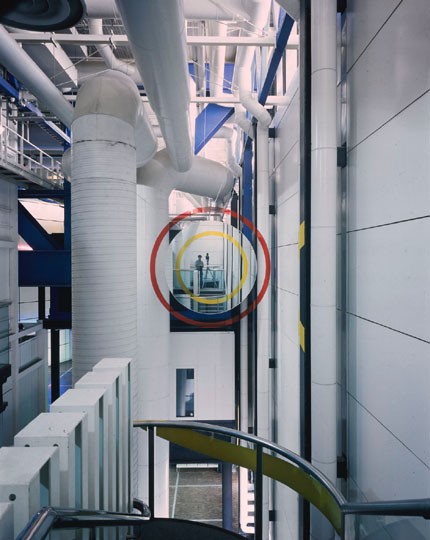
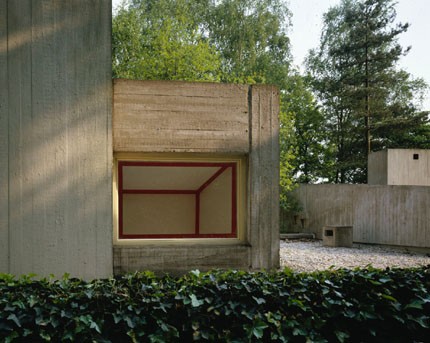
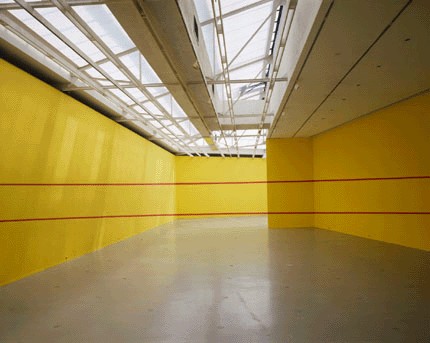
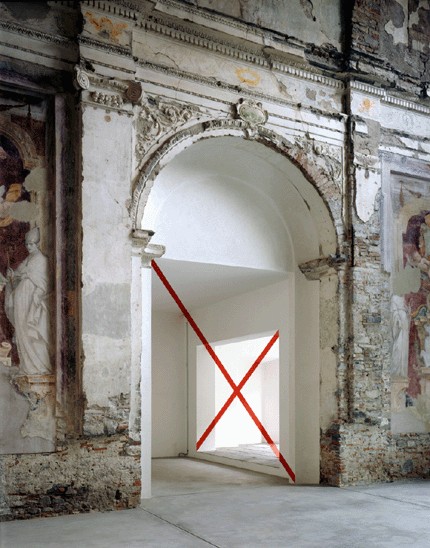
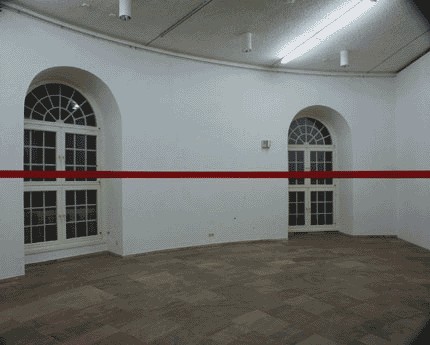
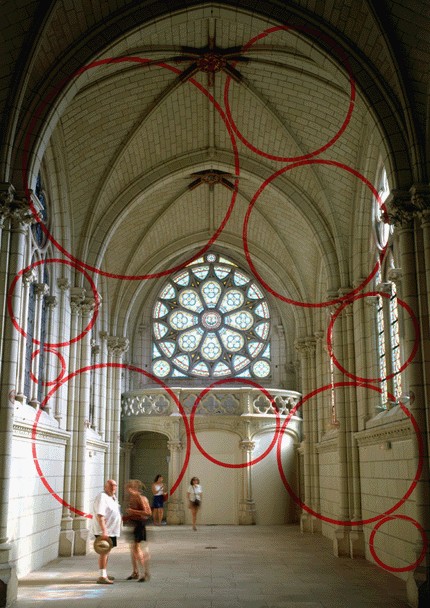
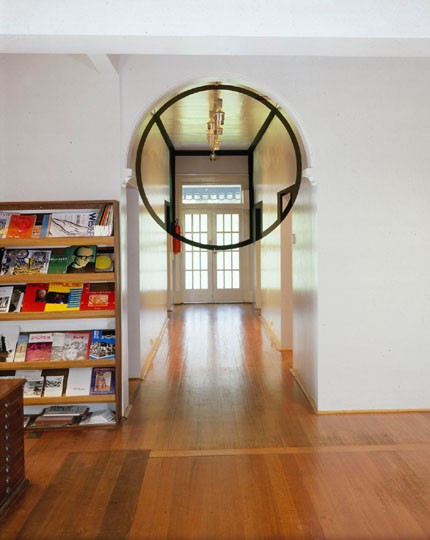
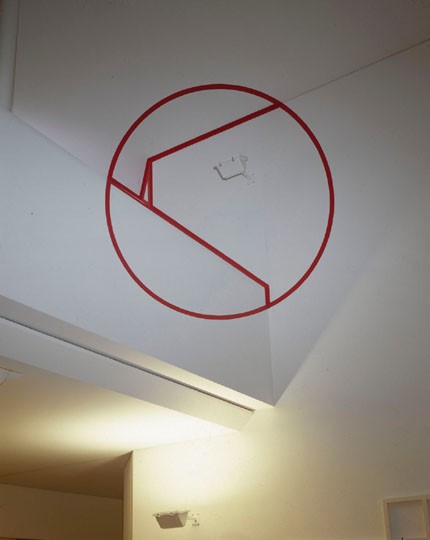
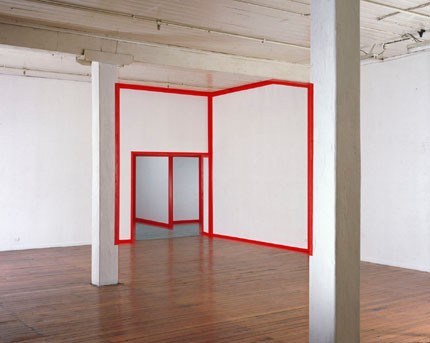
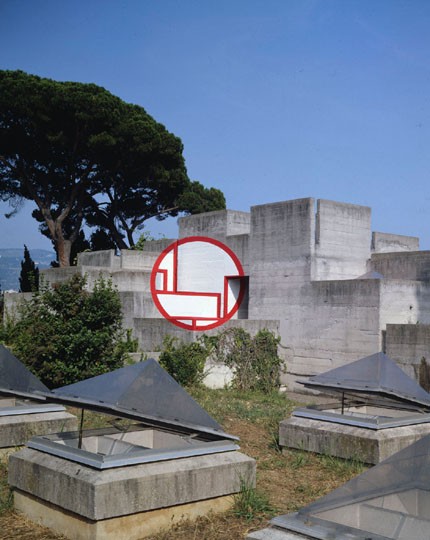
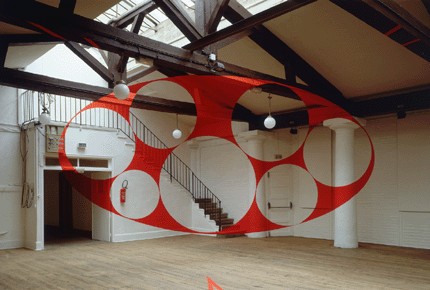
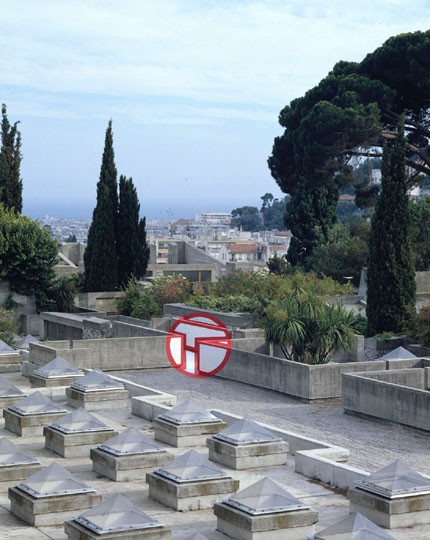
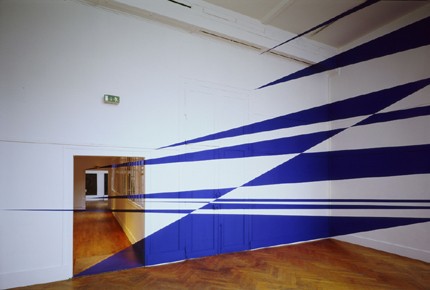
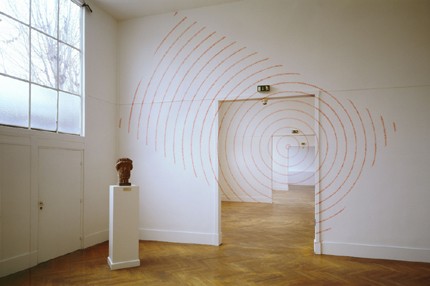
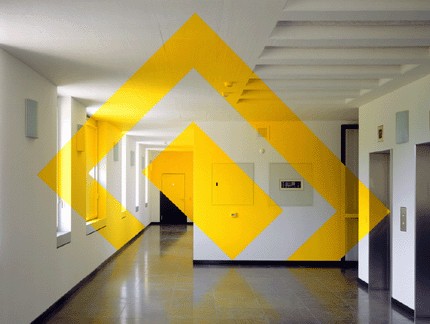
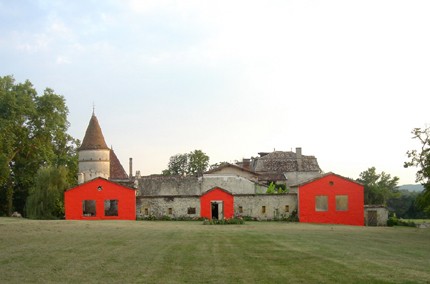
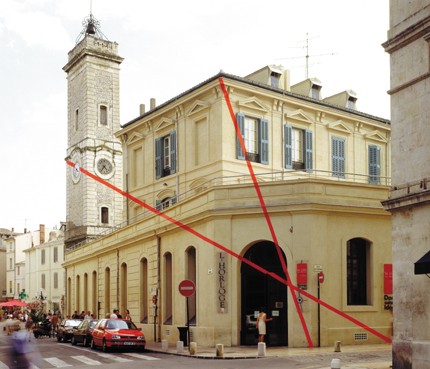
Fine Art by Felice Varini

Felice Varini is a Swiss artist who was nominated for the 2000/2001 Marcel Duchamp Prize, known for his geometric perspective-localized paintings of rooms and other spaces, using projector-stencil techniques. According to mathematics professor and art critic Joël Koskas, "A work of Varini is an anti-Mona Lisa."


Saturday, April 14, 2007

Frank Lloyd Wright


Frank Lloyd Wright (June 8, 1867—April 9, 1959) was one of the most prominent and influential architects of his era. He developed a series of highly individual styles over his extraordinarily long architectural career (spanning the years 1887-1959) and influenced the entire course of American architecture and building. To this day, he remains America's most famous architect.

Frank Lloyd Wright was born in the agricultural town of Richland Center, Wisconsin, United States, on June 8, 1867, of Welsh descent just two years after the end of the American Civil War. His father was a Baptist preacher, but as an adult Wright developed strong Unitarian and transcendental principles. (Eventually, in 1905, he would design the Unity Temple in Oak Park, Illinois.) As a child he spent a great deal of time playing with the kindergarten educational blocks by Friedrich Wilhelm August Froebel (known as Froebel Gifts) given to him by his mother. These consisted of various geometrically shaped blocks that could be assembled in various combinations to form three-dimensional compositions. Wright in his autobiography talks about the influence of these exercises on his approach to design. Many of his buildings are notable for the geometrical clarity they exhibit.
Wright's home in Oak Park, Illinois

Wright began his formal education in 1885 at the University of Wisconsin-Madison School for Engineering, where he was a member of a fraternity, Phi Delta Theta. He took classes part-time for two years while apprenticing under Allan Darst Conover, a local builder and professor of civil engineering. In 1887, Wright left the university without taking a degree (although he was granted an honorary doctorate of fine arts from the university in 1955) and moved to Chicago, Illinois, where he joined the architectural firm of Joseph Lyman Silsbee. Within the year, he had left Silsbee to work for the firm of Adler & Sullivan. Beginning in 1890, he was assigned all residential design work for the firm. In 1893, Louis Sullivan himself unwillingly asked Wright leave the firm after he discovered that Wright had been accepting clients independently from the firm (moonlighting). Wright established his own practice and home in the Chicago suburb of Oak Park, IL. By 1901, Wright's completed projects numbered approximately fifty, including many houses in his hometown. He married the daughter of a wealthy businessman, which raised his social status, and he became more well-known.

Between 1900 and 1917, his residential designs were "Prairie Houses" (extended low buildings with shallow, sloping roofs, clean sky lines, suppressed chimneys, overhangs and terraces, using unfinished materials), so-called because the design is considered to complement the land around Chicago. These houses are credited with being the first examples of the "open plan."

In fact, the manipulation of interior space in residential and public buildings, such as the Unitarian Unity Temple, in Oak Park, are hallmarks of his style. He believed that humanity should be central to all design. Many examples of this work can be found in Buffalo, New York, resulting from a friendship between Wright and an executive from the Larkin Soap Company, Darwin D. Martin. In 1902 the Larkin Company decided to build a new administration building.

His most famous private residence was constructed from 1935 to 1939—Fallingwater—for Mr. and Mrs. E.J. Kaufmann Sr., at Bear Run, Pennsylvania. It was designed according to Wright's desire to place the occupants close to the natural surroundings, with a stream and waterfall running under part of the building. The construction is a series of cantilevered balconies and terraces, using limestone for all verticals and concrete for the horizontals. The house cost $155,000, including the architect's fee of $8,000. Kaufmann's own engineers argued that the design was not sound. They were overruled by Wright, but the contractor secretly added extra steel to the horizontal concrete elements. In 1994, Robert Silman and Associates examined the building and developed a plan to restore the structure. In the late 1990s, steel supports were added under the lowest cantilever until a detailed structural analysis could be done. In March 2002, post-tensioning of the lowest terrace was completed.

It was also in the 1930s that Wright first designed "Usonian" houses. Intended to be highly practical houses for middle-class clients, the designs were based on a simple, yet elegant geometry. He would later use similar elementary forms in his First Unitarian Meeting House built in Madison, Wisconsin, between 1947 and 1950.

Wright is responsible for a concept or a series of extremely original concepts of suburban development united under the term Broadacre City. He proposed the idea in his book The Disappearing City in 1932, and unveiled a very large (12 by 12 feet) model of this community of the future, showing it in several venues in the following years. He went on developing the idea until his death.

His 'Usonian' homes set a new style for suburban design that was followed by countless developers. Many features of modern American homes date back to Wright; open plans, slab-on-grade foundations, and simplified construction techniques that allowed more mechanization or at least efficiency in building are amongst his innovations.

The Solomon R. Guggenheim Museum in New York City, is a building which occupied Wright for 19 years (1940–59) and is probably his most recognized masterpiece. The building rises as a warm beige spiral from its site on Fifth Avenue; its interior is similar to the inside of a seashell. Its unique central geometry was meant to allow visitors to experience Guggenheim's collection of nonobjective geometric paintings with ease by taking an elevator to the top level and then viewing artworks by walking down the slowly descending, central spiral ramp, which features a floor embedded with circular shapes and triangular light fixtures, in order to complement the geometric nature of the structure. Unfortunately, when the museum was completed, a number of important details of Wright's design were ignored, including his desire for the interior to be painted off-white. Furthermore, the Museum currently designs exhibits to be viewed by walking up the curved walkway rather than walking down from the top level.

Works:

Darwin D. Martin House, Buffalo, New York


The iconic Kaufmann residence (Fallingwater) is now a museum


Hillside Home School, 1902, Taliesin, Spring Green, Wisconsin

Sunday, April 8, 2007

Nice Art by Charles Rennie Mackintosh

Charles Rennie Mackintosh, architect, designer and artist is celebrated around the world as one of the most creative figures of the early 20th century.
Charles Rennie Mackintosh was born one of eleven children in the Townhead area of Glasgow, close to Glasgow Cathedral. From these beginnings, he has become one of the most celebrated architects of his generation.
He met Margaret Macdonald, his future wife, at Glasgow School of Art and much of what can be seen in the buildings and collections involves their artistic collaboration. You will also witness his masterful handling of light and space and see many of the well-known pieces of furniture which have themselves become icons.
Mackintosh took his inspiration from our Scottish traditions and blended them with the flourish of Art Nouveau and the simplicity of Japanese forms. Much of his work has survived. It can be seen today alongside that of his close collaborators in the group known as "The Four" and the other artists and designers who collectively created "The Glasgow Style".

Works:

Glass panel, for The Rose Boudoir, International Exhibition of Modern Decorative Art, Turin - The design, showing a stylised female figure, is closely related to Mackintosh's contemporaneous graphic designs. Coloured glass was regularly incorporated into Mackintosh's furniture and interiors of the early 1900s as inset panels. With these the light filtering through would create rich and varied effects.


Umbrella stand - The hall at Southpark Avenue was well-equipped for umbrellas with this item and also a free-standing hat and coat stand – perhaps it makes a comment on the Scottish weather. The construction is simple and apparent. This view shows it in the hall of The Mackintosh House.


Desk - This handsome desk contains silvered metal panels by Margaret Macdonald. They show stylised female figures which represent old and new styles of writing. The desk has doors at the sides that give access to shelving and storage for papers and drawings.


Bracket light fitting - These fittings were designed for the bedroom of Mackintosh’s first important house, Windyhill, in 1901. Two examples are displayed in the bedroom of The Mackintosh House, Hunterian Art Gallery.


Clock - The clock was designed as a set with a writing cabinet and accompanying chair for Walter Blackie, at The Hill House, Helensburgh. This is Mackintosh' version and it is displayed in the drawing room of The Mackintosh House, Hunterian Art Gallery. Its appearance changes as you look at it from different angles because of the use of slender, free-standing columns in the base. The numerals are painted on. Notice the discreet use of ivory inlay around the edge of the clock face.


Cheval mirror, for the bedroom - The mirror was described, when it was exhibited at the VIII Vienna Secession exhibition in 1900, as being like an upturned sledge, and it has a powerful presence. The side panels seem to spring up from the base and stretch plant-lie to the top. It formed part of the bedroom suite designed by Mackintosh in 1900 for his new marital home at 120 Mains Street, Glasgow. The suite is now displayed in the bedroom of The Mackintosh House, Hunterian Art Gallery.


Armchair - This is a particularly elegant chair, with its slender arms and legs. It is the only known occasion on which Mackintosh used leather as an upholstery.