Showing posts with label industrial design. Show all posts

Sunday, April 8, 2007

Nice Art by Charles Rennie Mackintosh

Charles Rennie Mackintosh, architect, designer and artist is celebrated around the world as one of the most creative figures of the early 20th century.
Charles Rennie Mackintosh was born one of eleven children in the Townhead area of Glasgow, close to Glasgow Cathedral. From these beginnings, he has become one of the most celebrated architects of his generation.
He met Margaret Macdonald, his future wife, at Glasgow School of Art and much of what can be seen in the buildings and collections involves their artistic collaboration. You will also witness his masterful handling of light and space and see many of the well-known pieces of furniture which have themselves become icons.
Mackintosh took his inspiration from our Scottish traditions and blended them with the flourish of Art Nouveau and the simplicity of Japanese forms. Much of his work has survived. It can be seen today alongside that of his close collaborators in the group known as "The Four" and the other artists and designers who collectively created "The Glasgow Style".

Works:

Glass panel, for The Rose Boudoir, International Exhibition of Modern Decorative Art, Turin - The design, showing a stylised female figure, is closely related to Mackintosh's contemporaneous graphic designs. Coloured glass was regularly incorporated into Mackintosh's furniture and interiors of the early 1900s as inset panels. With these the light filtering through would create rich and varied effects.


Umbrella stand - The hall at Southpark Avenue was well-equipped for umbrellas with this item and also a free-standing hat and coat stand – perhaps it makes a comment on the Scottish weather. The construction is simple and apparent. This view shows it in the hall of The Mackintosh House.


Desk - This handsome desk contains silvered metal panels by Margaret Macdonald. They show stylised female figures which represent old and new styles of writing. The desk has doors at the sides that give access to shelving and storage for papers and drawings.


Bracket light fitting - These fittings were designed for the bedroom of Mackintosh’s first important house, Windyhill, in 1901. Two examples are displayed in the bedroom of The Mackintosh House, Hunterian Art Gallery.


Clock - The clock was designed as a set with a writing cabinet and accompanying chair for Walter Blackie, at The Hill House, Helensburgh. This is Mackintosh' version and it is displayed in the drawing room of The Mackintosh House, Hunterian Art Gallery. Its appearance changes as you look at it from different angles because of the use of slender, free-standing columns in the base. The numerals are painted on. Notice the discreet use of ivory inlay around the edge of the clock face.


Cheval mirror, for the bedroom - The mirror was described, when it was exhibited at the VIII Vienna Secession exhibition in 1900, as being like an upturned sledge, and it has a powerful presence. The side panels seem to spring up from the base and stretch plant-lie to the top. It formed part of the bedroom suite designed by Mackintosh in 1900 for his new marital home at 120 Mains Street, Glasgow. The suite is now displayed in the bedroom of The Mackintosh House, Hunterian Art Gallery.


Armchair - This is a particularly elegant chair, with its slender arms and legs. It is the only known occasion on which Mackintosh used leather as an upholstery.

Thursday, April 5, 2007

Nice Art of Alvar Aalto


ALVAR AALTO

Born in Jyväskylä in 1898 and died in Helsinki in 1976. Alvar Aalto is one of the important figures of modern architecture and is the best-known Finnish architect abroad. His work ranges from area plans to designs for individual buildings and furnishings. He created organic buildings that combined different materials, were fragmen-ted or incorporated curves. In collaboration with his wife Aino Marsio-Aalto, he worked in the fields of interior design and furnish-ings. In this period he began to produce pieces, like the stool with three legs, that were remarkably modest but meticulously finished. Aalto's contribution to the standardised construction and socially oriented architectural planning of the modern movement was important for the development of Finnish architecture and society.

Although his early work borrowed from the neoclassic movement, he eventually adapted the symbolism and functionalism of the Modern Movement to generate his plans and forms. Aalto's mature work embodies a unique functionalist/expressionist and humane style, successfully applied to libraries, civic centers, churches, housing, etc.

A synthesis of rational with intuitive design principles allowed Aalto to create a long series of functional yet non-reductionist buildings. Alvar Aalto generated a style of functionalism which avoided romantic excess and neoclassical monotony. Although Aalto borrowed from the International Style, he utilized texture, color, and structure in creative new ways. He refined the generic examples of modern architecture that existed in most of Europe and recreated them into a new Finnish architecture. Aalto's designs were particularly significant because of their response to site, material and form.

Aalto generated a large body of work in Germany, America, and Sweden. Often at work on multiple projects, he tended to intermingle ideas and details within his work. The spectrum of Aalto's work exhibits a sensual detailing that separates him from most of his contemporaries.

Aalto was a master of form and planning, as well as of details that relate a building successfully to its users. His buildings have provided renewed inspiration in the face of widespread disillusionment with high modernism on one hand, and post-modernism on the other.

Aalto died in Helsinki in May 1976.

His works:

STOOL 60 - Birch, natural lacquered or honey-birch. Three legs. Seat options: birch veneer, linoleum, laminate, upholstered or special edition curly-birch


FLOOR LAMP A810 - White painted metal lampshade. Base and stand covered with black leather. Upper part polished brass


The Savoy Vase, also known as the Aalto Vase.

Wednesday, April 4, 2007

Industrial Design of Lebedev


There is series of industrial design from Art Lebedev Studio:

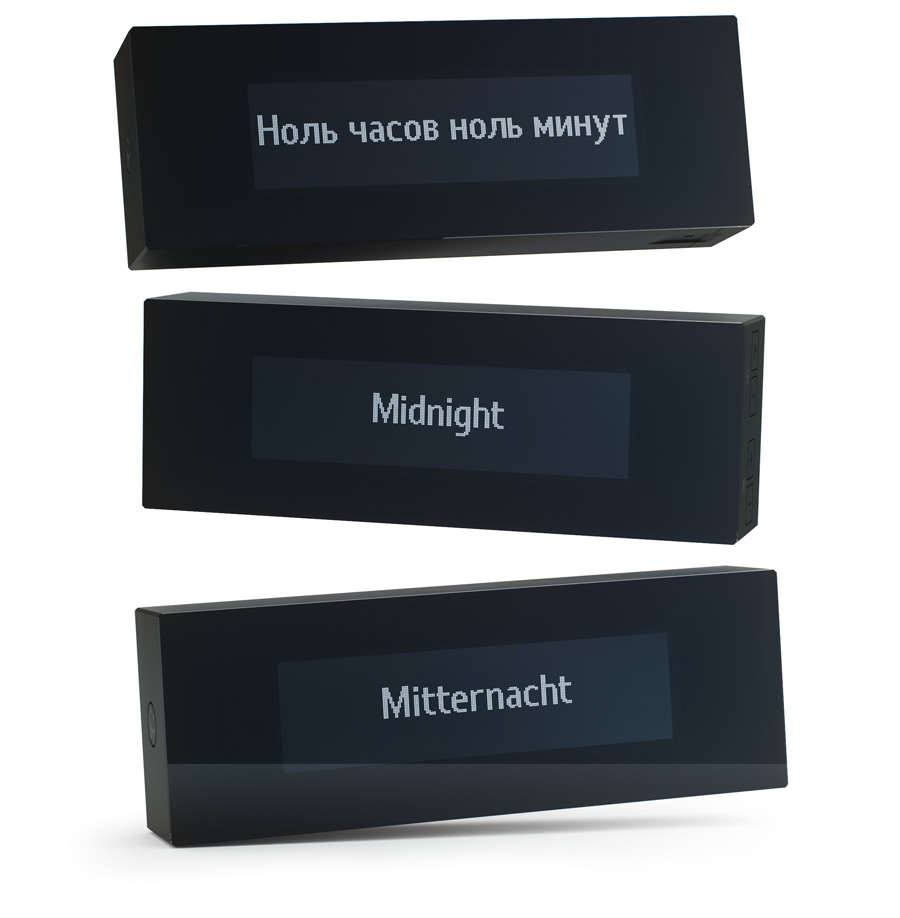
Clock:


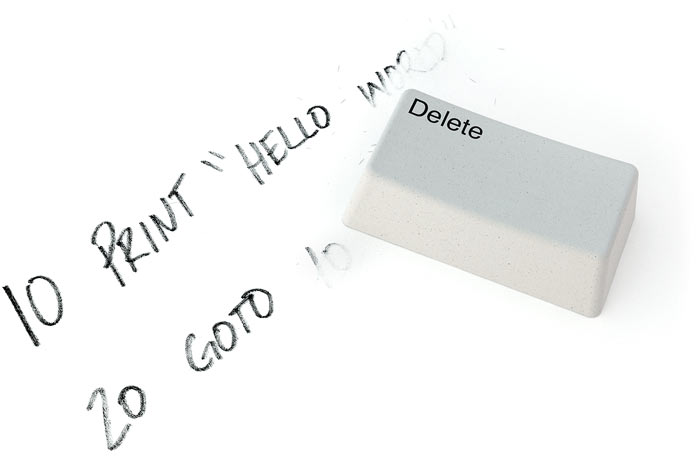
eraser


flycatcher


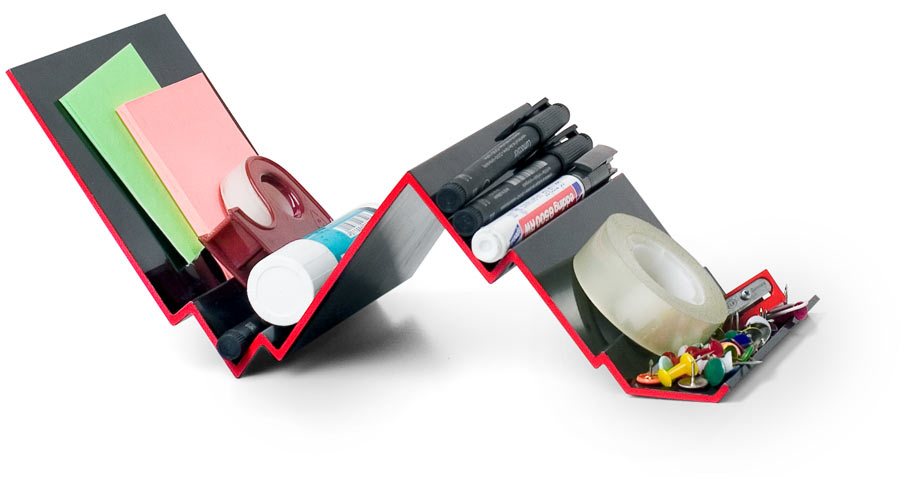
holder for small items 

@teacup

smiles for kids

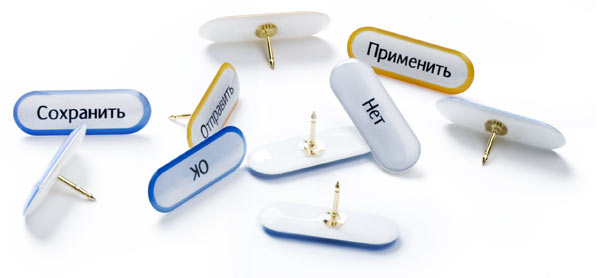
buttons

computer mouse